Spacecraft catalog
Beyond the launch vehicle.
571 capsules, orbiters, cargo vehicles, stations, and spacecraft from across the program.
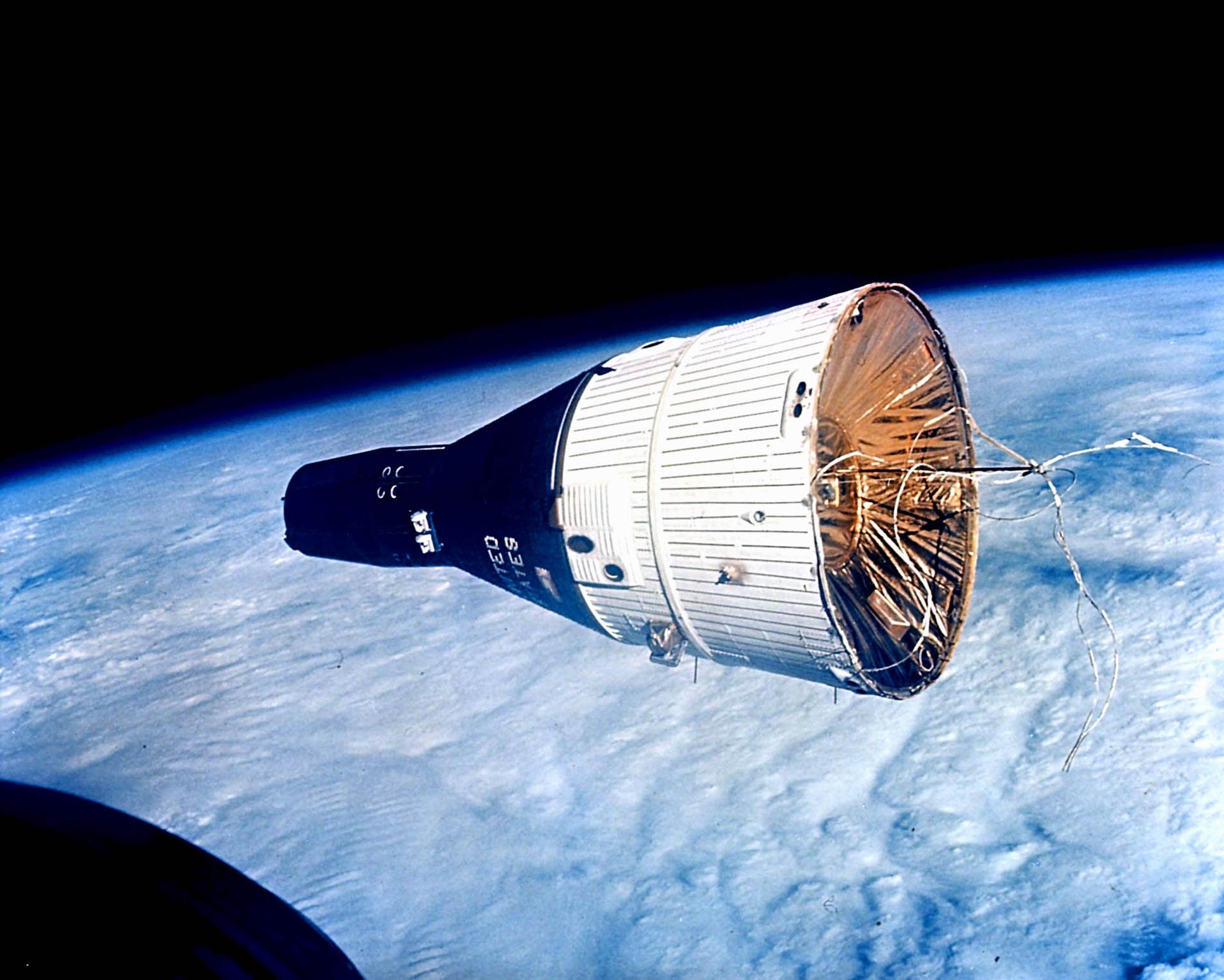
Gemini SC7
National Aeronautics and Space Administration
Gemini SC7 is the Gemini capsule used for the Gemini 7 mission launched on December 4, 1965 and crewed by astronauts Frank Borman (command pilot) and Jim Lovell (pilot).
Gemini SC8
National Aeronautics and Space Administration
Gemini SC8 is the Gemini capsule used for the Gemini 8 mission launched on March 16, 1966 and crewed by astronauts Neil Armstrong (command pilot) and David Scott (pilot).
Gemini SC9
National Aeronautics and Space Administration
Gemini SC9 is the Gemini capsule used for the Gemini 9 mission launched on June 3, 1966 and crewed by astronauts James A. Lovell, Jr. (command pilot) and Edwin E. Aldrin, Jr. (pilot).
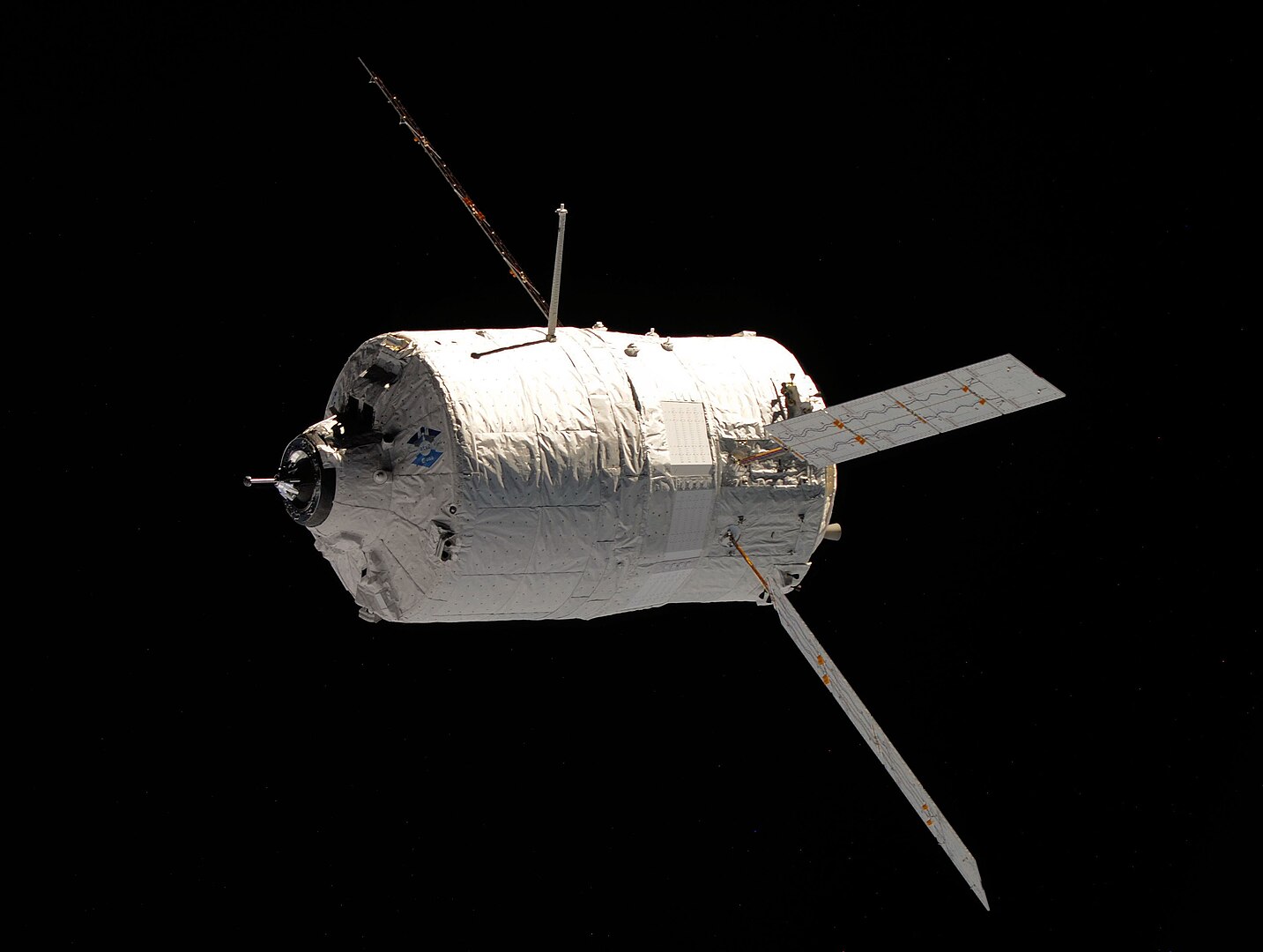
Georges Lemaître ATV
Arianespace
The Georges Lemaître ATV, or Automated Transfer Vehicle 5 (ATV-5), was a European unmanned cargo resupply spacecraft, named after the Belgian astronomer Georges Lemaître. The spacecraft was launched during the night of 29 July 2014 (23:44 GMT, 20:44 local time, 30 July 01:44 CEST), on a mission to supply the International Space Station (ISS) with propellant, water, air, and dry cargo. It was the fifth and final ATV to be built and launched. Georges Lemaître was constructed in Turin, Italy, and Bremen, Germany. Cargo loading was completed in Guiana Space Center on 23 July 2014.
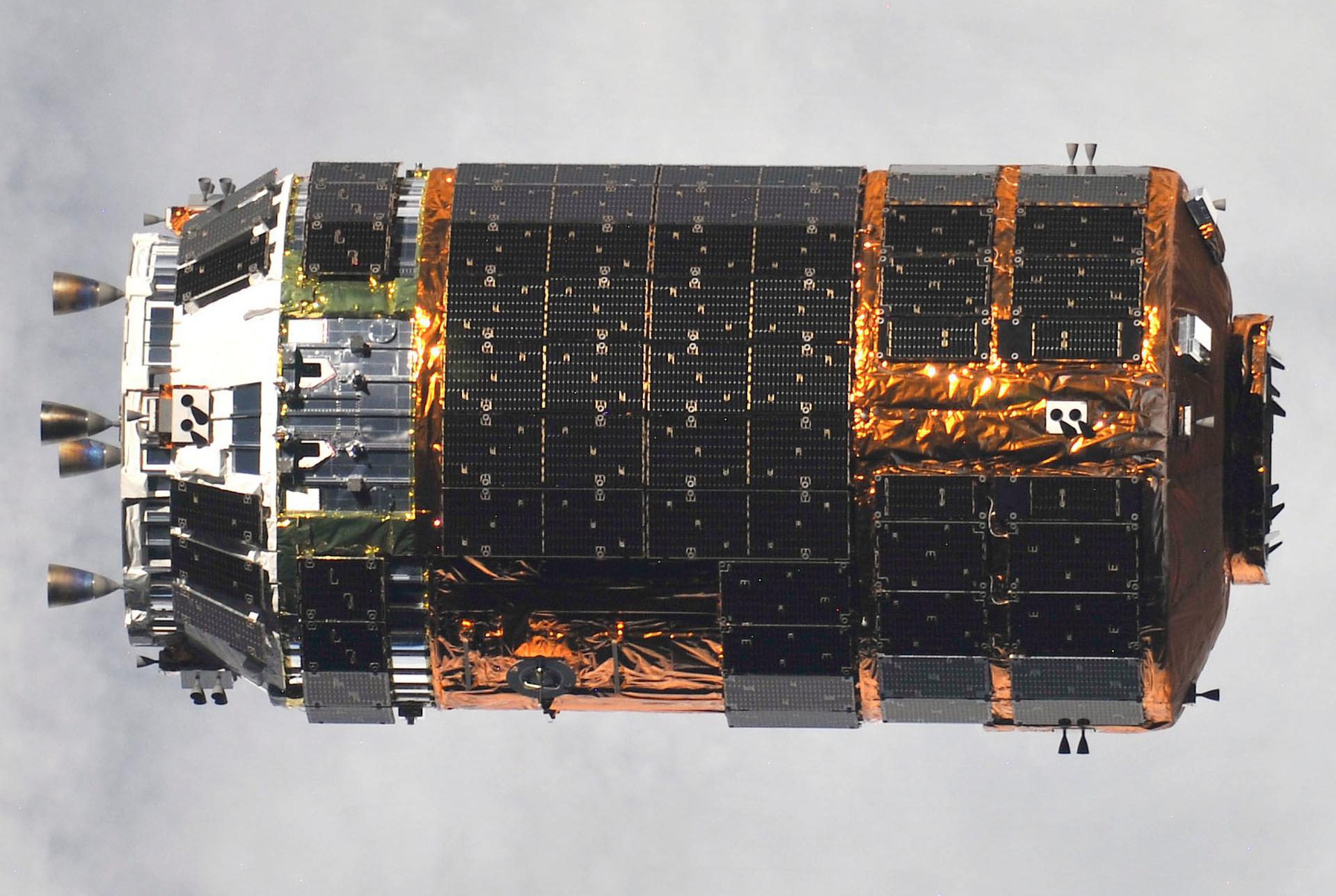
HTV Technical Demonstration Vehicle
Japan Aerospace Exploration Agency
HTV-1, also known as the HTV Demonstration Flight or HTV Technical Demonstration Vehicle, was the first Japanese Space Agency (JAXA) H-II Transfer Vehicle, launched in September 2009 to resupply the International Space Station and support the JAXA Kibo laboratory or JEM. It was an unmanned cargo spacecraft carrying a mixture of pressurised and unpressurised cargo to the space station. After a 52-day successful mission, HTV departed the ISS on 31 October 2009 after being released by the station's robotic arm. The spacecraft re-entered the Earth's atmosphere on 2 November and disintegrated on re-entry as planned.
Johannes Kepler ATV
Arianespace
The Johannes Kepler ATV, or Automated Transfer Vehicle 002 (ATV-002), was an unmanned cargo spacecraft built to resupply the International Space Station (ISS). It was launched on 16 February 2011 by the European Space Agency (ESA). Johannes Kepler carried propellant, air and dry cargo weighing over 7,000 kilograms, and had a total mass of over 20,000 kilograms, making it, at the time, the heaviest payload launched by the ESA. The spacecraft was named after the 17th-century German astronomer Johannes Kepler.
Jules Verne ATV
Arianespace
The Jules Verne ATV, or Automated Transfer Vehicle 001 (ATV-001), was an unmanned cargo resupply spacecraft launched by the European Space Agency (ESA). The ATV was named after the 19th-century French science-fiction author Jules Verne. It was launched on 9 March 2008 on a mission to supply the International Space Station (ISS) with propellant, water, air, and dry cargo. Jules Verne was the first of five ATVs to be launched.
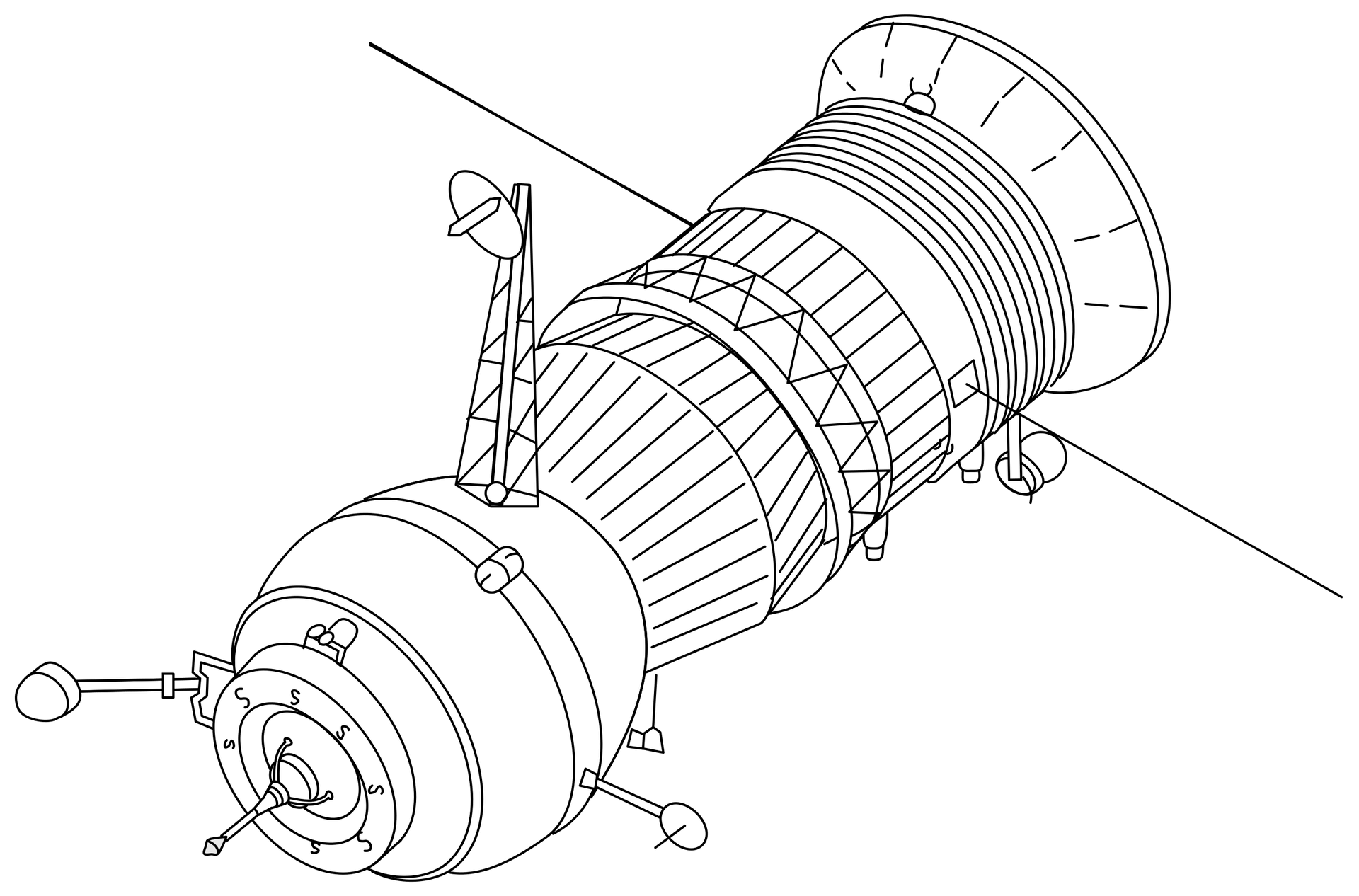
Kosmos 1669
Russian Federal Space Agency (ROSCOSMOS)
Kosmos 1669 (Russian: Космос-1669), was a Progress spacecraft used to resupply the space station Salyut 7. Only Progress to receive a Kosmos Designation
Kounotori 2
Japan Aerospace Exploration Agency
Kounotori 2 , also known as HTV-2, was launched in January 2011 and was the second Japanese H-II Transfer Vehicle to resupply the International Space Station (ISS). It was launched by the H-IIB Launch Vehicle No. 2 (H-IIB F2) manufactured by MHI and JAXA. After the supplies were unloaded, Kounotori 2 was loaded with waste material from ISS, including used experiment equipment and used clothes. Kounotori 2 was then unberthed and separated from the ISS and burned up upon reentering the atmosphere on 30 March 2011.
Kounotori 3
Japan Aerospace Exploration Agency
Kounotori 3, also known as HTV-3, is the third Japanese H-II Transfer Vehicle. It was launched on 21 July 2012 to resupply the International Space Station (ISS) aboard the H-IIB Launch Vehicle No. 3 (H-IIB F3) manufactured by MHI and JAXA. Kounotori 3 arrived at the ISS on 27 July 2012, and Expedition 32 Flight Engineer and JAXA astronaut Akihiko Hoshide used the International Space Station's Canadarm2 robotic arm to install Kounotori 3, to its docking port on the Earth-facing side of the Harmony module at 14:34 GMT.
Kounotori 4
Japan Aerospace Exploration Agency
Kounotori 4, also known as HTV-4, was the fourth flight of the H-II Transfer Vehicle, an unmanned cargo spacecraft launched in August 2013 to resupply the International Space Station. It launched from Tanegashima Space Center aboard H-IIB rocket on August 3, 2013 and connected to ISS by August 9, 2013; it carried 5.4 tons of cargo. Kounotori 4 undocked on September 4, 2013 and was destroyed by reentry on 7 September 2013.
Kounotori 5
Japan Aerospace Exploration Agency
Kounotori 5, also known as HTV-5, is the fifth flight of the H-II Transfer Vehicle, an uncrewed cargo spacecraft launched to resupply the International Space Station. It was launched on August 19, 2015.
Kounotori 6
Japan Aerospace Exploration Agency
Kounotori 6, also known as HTV-6, is the sixth flight of the H-II Transfer Vehicle, an unmanned cargo spacecraft launched to resupply the International Space Station. It was launched at 13:26:47 UTC on 9 December 2016 aboard H-IIB launch vehicle from Tanegashima Space Center.
Kounotori 7
Japan Aerospace Exploration Agency
Kounotori 7, also known as HTV-7 is the seventh flight of the H-II Transfer Vehicle (HTV), an unmanned cargo spacecraft launched on 22 September 2018 to resupply the International Space Station.
Kounotori 8
Japan Aerospace Exploration Agency
Kounotori 8 is the eighth HTV spacecraft. It is scheduled to launch in September 2019 on a resupply mission to the ISS.
Kounotori 9
Japan Aerospace Exploration Agency
Kounotori 9 is the ninth HTV spacecraft. It is scheduled to launch in May 2020 on a resupply mission to the ISS.
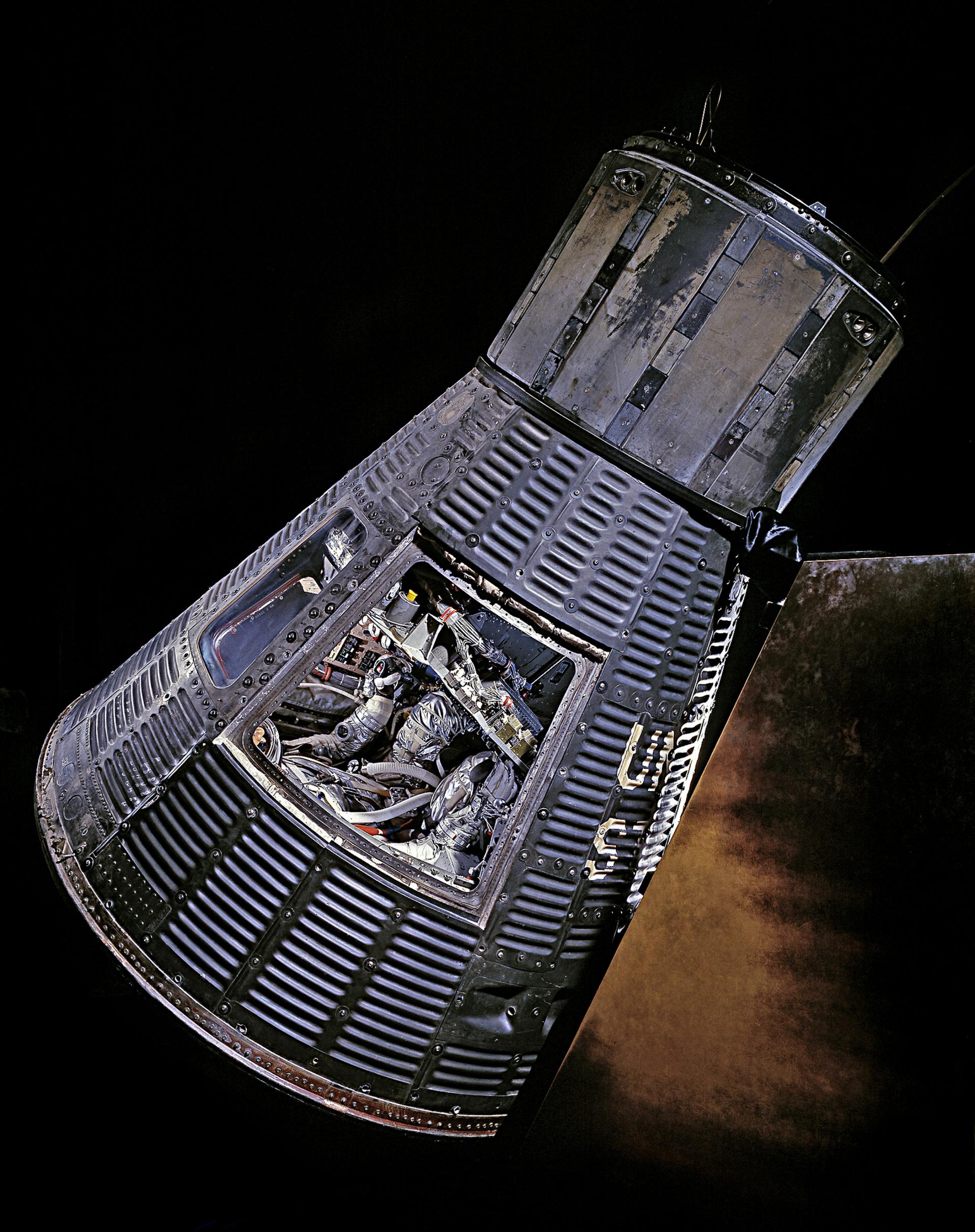
Mercury No.11
National Aeronautics and Space Administration
Mercury No.11 is the Mercury capsule used for the Mercury-Redstone 4 - callsign "Liberty Bell 7" - mission launched on July 21, 1961 and piloted by astronaut Virgil "Gus" Grissom.
Mercury No.13
National Aeronautics and Space Administration
Mercury No.13 is the Mercury capsule used for the Mercury-Atlas 6 - callsign "Friendship 7" - mission launched on February 20, 1962 and piloted by astronaut John Glenn.
Mercury No.14
National Aeronautics and Space Administration
Mercury No.14 is the Mercury capsule used for the Little Joe 5A mission.
Mercury No.16
National Aeronautics and Space Administration
Mercury No.16 is the Mercury capsule used for the Mercury-Atlas 8 - callsign "Sigma 7" - mission launched on October 3, 1962 and piloted by astronaut Walter M. Schirra Jr.
Mercury No.18
National Aeronautics and Space Administration
Mercury No.18 is the Mercury capsule used for the Mercury-Atlas 7 - callsign "Aurora 7" - mission launched on May 24, 1962 and piloted by astronaut Scott Carpenter.
Mercury No.2
National Aeronautics and Space Administration
Mercury No.2 is the Mercury capsule used for the Mercury-Redsone 1 mission which failed on launch.
Mercury No.20
National Aeronautics and Space Administration
Mercury No.20 is the Mercury capsule used for the Mercury-Atlas 9 - callsign "Faith 7" - mission launched on May 15, 1963 and piloted by astronaut Gordon Cooper.
Mercury No.3
National Aeronautics and Space Administration
Mercury No.3 is the Mercury capsule used for the Little Joe 5 flight.