Spacecraft catalog
Beyond the launch vehicle.
571 capsules, orbiters, cargo vehicles, stations, and spacecraft from across the program.
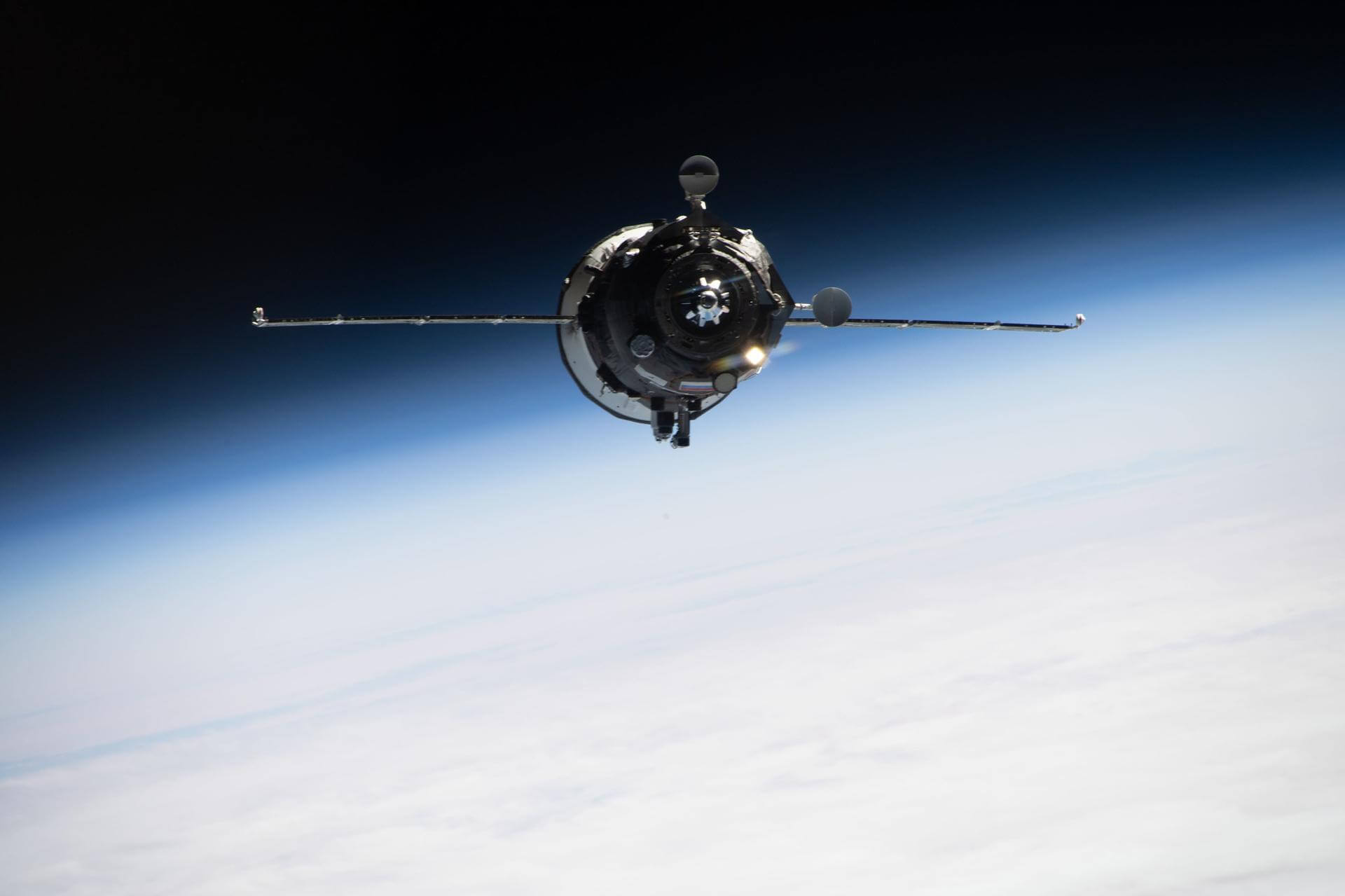
Progress MS-21
Russian Federal Space Agency (ROSCOSMOS)
Progress MS-21 is a Progress spacecraft used by Roscosmos to resupply the International Space Station (ISS).
Progress MS-22
Russian Federal Space Agency (ROSCOSMOS)
Progress MS-22 is a Progress spacecraft used by Roscosmos to resupply the International Space Station (ISS).
Progress MS-23
Russian Federal Space Agency (ROSCOSMOS)
Progress MS-23 is a Progress spacecraft used by Roscosmos to resupply the International Space Station (ISS).
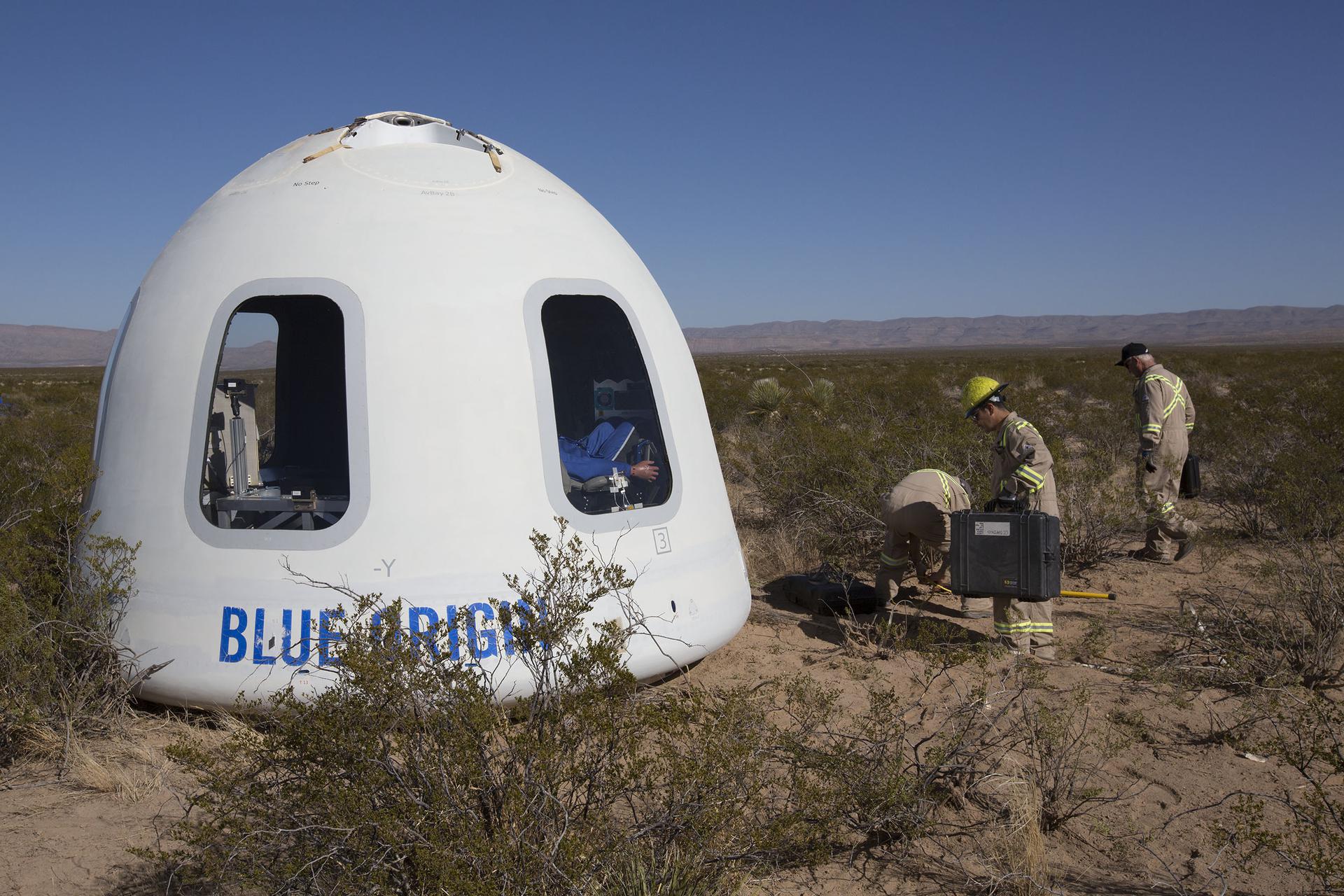
RSS First Step
Blue Origin
First Blue Origin New Shepard Crew Capsule 2.0 to carry human passengers. This capsule is outfitted with improvements to environmental features such as acoustics and temperature regulation inside the capsule, crew display panels, and speakers with a microphone and push-to-talk button at each seat.
RSS H.G. Wells
Blue Origin
Second New Shepard capsule. It is dedicated to uncrewed flights.
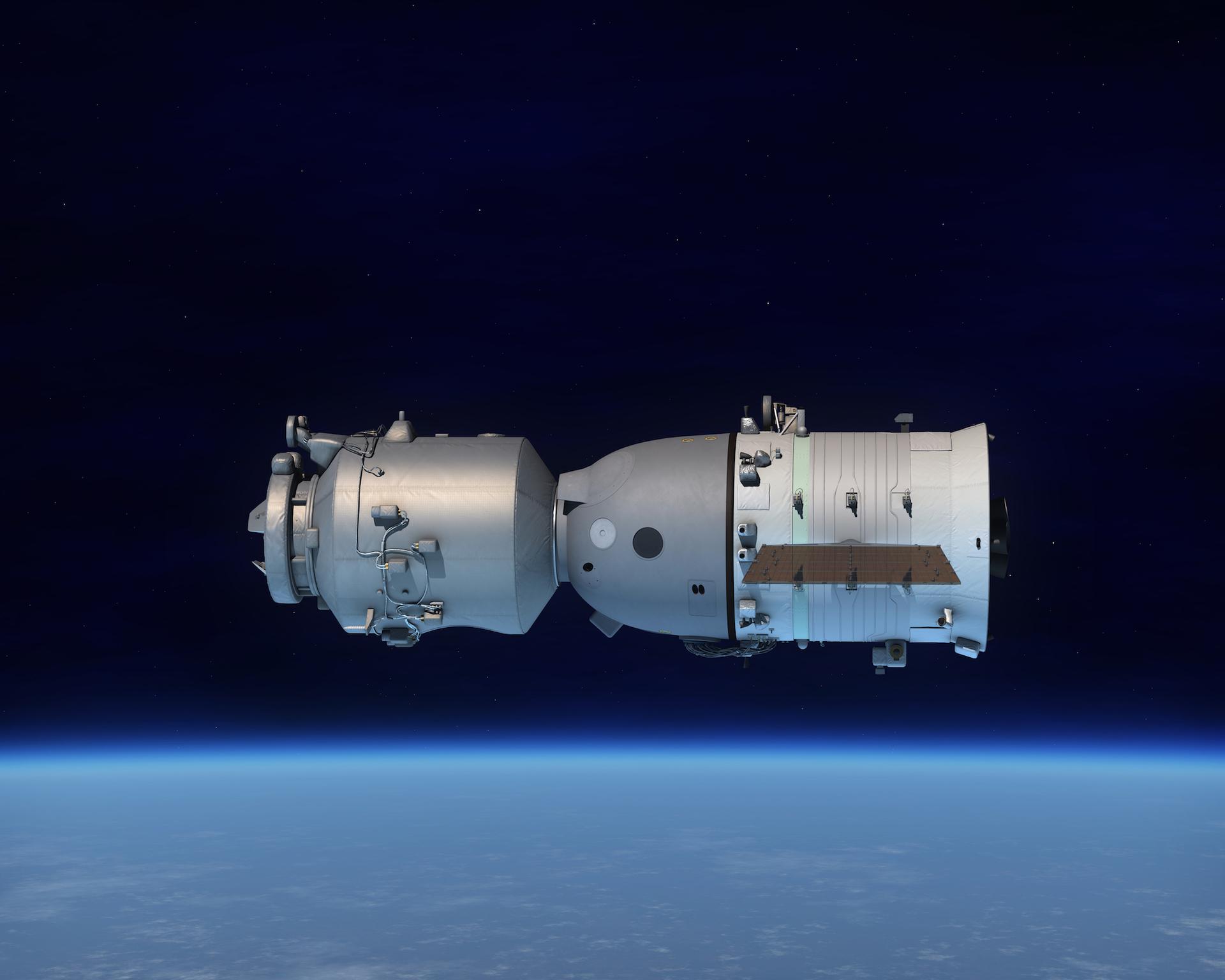
Shenzhou 1
China National Space Administration
The first Shenzhou spacecraft was different from those later used. Instead of featuring unfolding solar panels, Shenzhou 1 was equipped with fixed solar cells. During this first flight there were also no orbit changes. According to Qi Faren the chief designer of the spacecraft, only 8 of the 13 sub-systems on board the spacecraft were operational. Shenzhou 1 was designed primarily to test the Long March 2F rocket. The only systems and capabilities tested on the spacecraft were the separation of the modules, attitude control, lifting body reentry, the heat shield, and ground recovery.
Shenzhou 10
China National Space Administration
The Shenzhou spacecraft docked with the Tiangong-1 trial space laboratory module on 13 June, and the astronauts performed physical, technological, and scientific experiments while on board. Shenzhou 10 was the final mission to Tiangong 1 in this portion of the Tiangong program.
Shenzhou 11
China National Space Administration
Shenzhou 11 was a crewed spaceflight of the Shenzhou program of China, launched on 17 October 2016 (16 October UTC) from the Jiuquan Satellite Launch Center. It was China's sixth crewed space mission. Two days after launch, it docked with the Tiangong-2 space laboratory, which had been launched on September 15, 2016.
Shenzhou 12
China National Space Administration
First crewed mission to the Chinese Space Station.
Shenzhou 13
China National Space Administration
Second crewed mission to the Chinese Space Station.
Shenzhou 14
China National Space Administration
Third crewed mission to the Chinese Space Station.
Shenzhou 15
China National Space Administration
Fourth crewed mission to the Chinese Space Station.
Shenzhou 16
China National Space Administration
Fifth crewed mission to the Chinese Space Station.
Shenzhou 19
China National Space Administration
Spacecraft used to launch 3 taikonauts on the 8th crewed mission to the Tiangong space station.
Shenzhou 2
China National Space Administration
Inside the reentry capsule were a monkey, a dog and a rabbit in a test of the spaceship's life support systems. The reentry module separated from the rest of the spacecraft after just over seven days in orbit, with the orbital module staying in orbit for another 220 days.
Shenzhou 20
China National Space Administration
Spacecraft used to launch 3 astronauts on the 9th crewed mission to the Chinese Space Station.
Shenzhou 21
China National Space Administration
Spacecraft used to launch 3 astronauts on the 10th crewed mission to the Chinese Space Station.
Shenzhou 22
China National Space Administration
Spacecraft to be launched without crew to replace Shenzhou 20 that was damaged by orbital debris on the descent module porthole window, and thus deemed unsuitable for crew re-entry. The spacecraft will later return three Chinese astronauts on the 10th flight to the Chinese Space Station back to Earth, after launching on Shenzhou 21.
Shenzhou 3
China National Space Administration
This was the first Shenzhou spacecraft launched that could have actually carried a human and as such the main objective of the mission was to test the systems required to support a human in space. On board it carried a dummy to simulate physiological signals of a human — palpitation, pulse, breathing, eating, metabolism, and excretion.
Shenzhou 4
China National Space Administration
The spacecraft was equipped for a manned flight, even featuring a sleeping bag, food, and medication. The windows were constructed of a new material that was designed to stay clear even after reentry to allow an astronaut to confirm that the parachutes have deployed properly. It was said that the spacecraft flown on Shenzhou 4 had no major differences to that used on Shenzhou 5. It flew with the ability for manual control and emergency landing, systems needed for a manned flight. A week before the launch, astronauts trained in the spacecraft to familiarise themselves with its systems.
Shenzhou 5
China National Space Administration
Shenzhou 5 was the first human spaceflight mission of the Chinese space program, launched on 15 October 2003. The Shenzhou spacecraft was launched on a Long March 2F launch vehicle.
Shenzhou 6
China National Space Administration
Shenzhou 6 was the second human spaceflight of the Chinese space program, launched on October 12, 2005 on a Long March 2F rocket from the Jiuquan Satellite Launch Center. The Shenzhou spacecraft carried a crew of Fèi Jùnlóng (费俊龙) and Niè Hǎishèng (聂海胜) for five days in low Earth orbit. It launched three days before the second anniversary of China's first human spaceflight, Shenzhou 5.
Shenzhou 7
China National Space Administration
The Shenzhou spacecraft carrying the three crew members was launched 25 September 2008, by a Long March 2F (CZ-2F) rocket which lifted off from the Jiuquan Satellite Launch Center at 21:10 CST. The mission lasted three days, after which the craft landed safely in Siziwang Banner in central Inner Mongolia on 28 September 2008, at 17:37 CST. The Shenzhou 7 EVA made the Chinese space program the third to have conducted an EVA.
Shenzhou 8
China National Space Administration
The Shenzhou 8 spacecraft was automatically docked with the Tiangong-1 space module (launched on 29 September 2011) on November 3 and again on November 14, 2011. This unmanned docking—China's first—was followed in 2012 with the manned Shenzhou 9 mission, which performed a manned docking (also China's first) with the Tiangong-1 module.