Launch index
Launch Successful

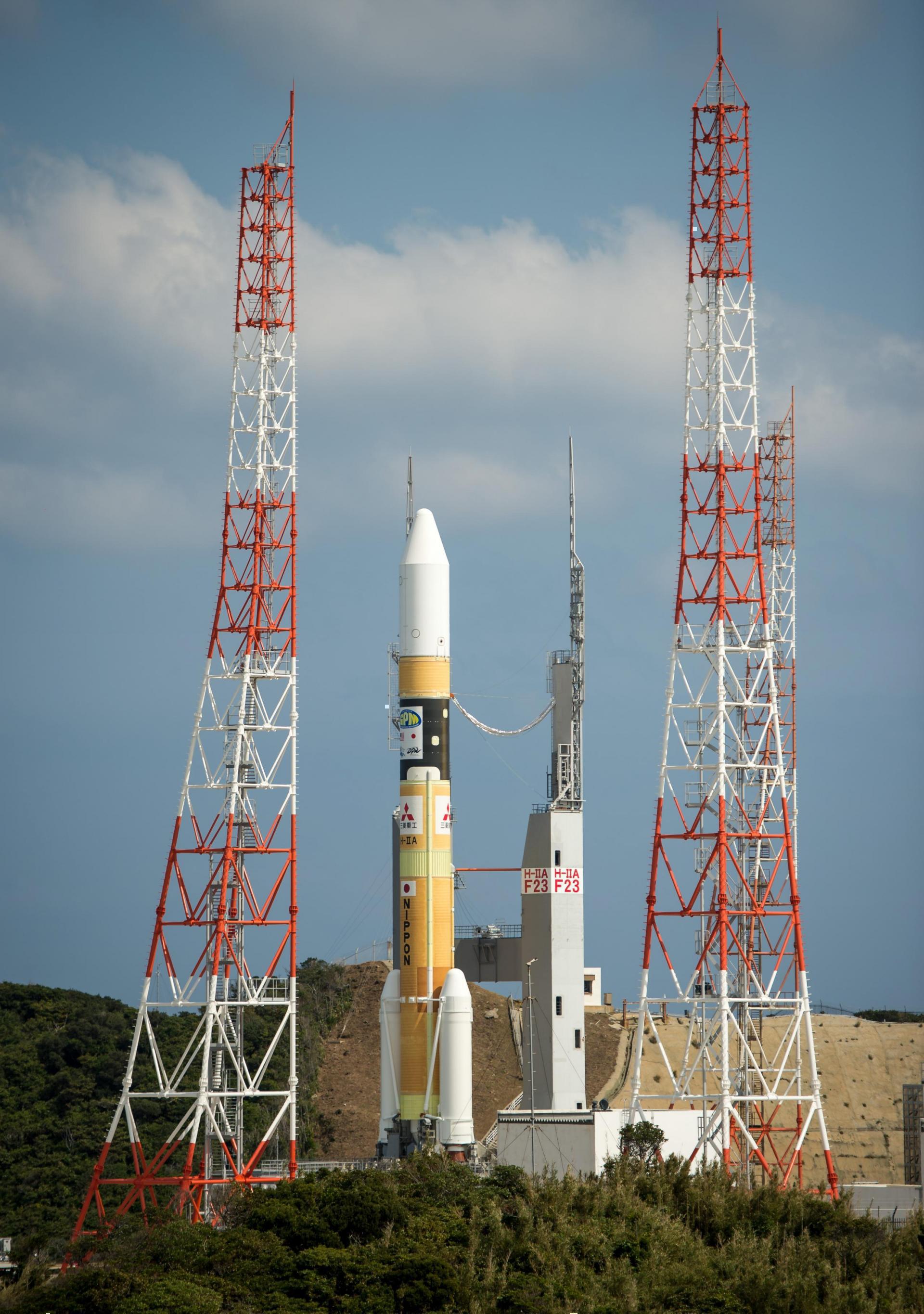
H-IIA 202 | KhalifaSat & GOSAT-2

October 29, 2018 at 4:08 AM UTC

Tanegashima Space Center, Japan

H-IIA 202 | KhalifaSat & GOSAT-2 launch image
Mission imagery · H-IIA 202

Launch details

LAUNCH IN

T−00d00h00m00s

October 29, 2018 at 4:08 AM UTC

Status: Launch Successful · Live feed refreshes every 30 seconds

Yoshinobu Launch Complex LP-1

Tanegashima Space Center, Japan · 30.4008, 130.9778

Open map
Rocket
H-IIA 202
Launch site
Yoshinobu Launch Complex LP-1

Tanegashima Space Center, Japan

Launch probability
-1%
Window opens
October 29, 2018 at 4:08 AM UTC
Window closes
October 29, 2018 at 4:20 AM UTC
Feed updated
July 7, 2023 at 12:52 PM UTC

Mission description

KhalifaSat is an Earth observation satellite for UAE. KhalifaSat will provide high-resolution imagery of Earth to be used for various purposes, including urban planning, change monitoring, area classification, monitoring environmental change and aiding relief efforts for natural disasters. GOSAT 2 (Greenhouse gases Observing SATellite 2) is a Japanese satellite dedicated to greenhouse gas measurement from space. It's a follow on to the GOSAT mission and includes such improvements as an ability to gather more precise data and monitor carbon monoxide concentrations.

Vehicle

H-IIA 202

H-II · 202

Height

53 m

Diameter

4 m

LEO capacity

10,000 kg

Successful launches

35

Launch complex

Yoshinobu Launch Complex LP-1

Tanegashima Space Center, Japan

The Tanegashima Space Center is the largest rocket-launch complex in Japan. It is located on the southeastern tip of Tanegashima, an island located south of Kyushu, an island and region and Japan. It was established in 1969 when the National Space Development Agency of Japan (NASDA) was formed, and is now run by JAXA. The activities that take place at TNSC include assembly, testing, launching, and tracking satellites, as well as rocket engine firing tests.

Open map